Wildlife exclusion
Sealing an attic to keep out common wildlife.
To keep wildlife out of your attic, start by identifying roofline gaps, damaged vents, soffits, and other entry points. Exclusion can protect an attic only when the active animal, dependent young, entry route, and repair timing are understood first.
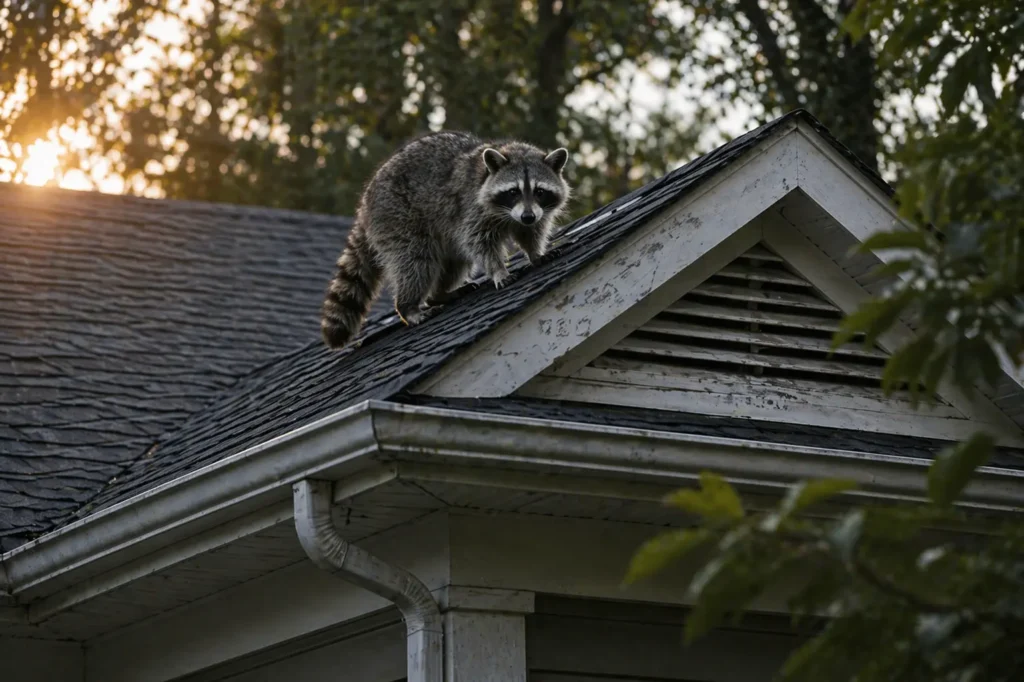
How to keep wildlife out of your attic.
Look from a safe position for damaged soffits, fascia, vents, roof returns, construction gaps, chimney openings, loose screens, and tree access. Inside evidence can include sounds, droppings, nesting material, disturbed insulation, odor, or daylight through a gap.
Identify the animal and schedule
Squirrels are commonly active during the day, while raccoons may sound heavier at night. Bats, birds, and other species have different legal and seasonal considerations. Noise alone is not definitive.
Do not trap wildlife inside
Closing the primary opening while an animal remains can cause damage, odor, or movement into living space. Dependent young may not be able to leave even when an adult is outside.
Use durable repairs
Once the structure is clear, repair materials and methods should match the location, animal, ventilation need, and construction. Cosmetic foam alone is rarely a complete wildlife repair.
Address access around the roofline
Trim safe-to-manage branches, secure food and trash, maintain vents and screens, and recheck repairs after storms.
Prioritize the primary opening and secondary gaps
Wildlife may use one obvious damaged soffit while investigating several smaller roofline gaps. Document rub marks, hair, staining, chew damage, and travel routes before repair. A complete plan should address the active entry in the correct sequence, then reinforce other vulnerable points without blocking required drainage or ventilation.
Reinspect after the repair
Listen at the times when activity previously occurred and look for new damage, displaced material, odor, or an animal trying another route. Check exterior repairs from the ground after severe weather. If sounds continue, do not keep closing random gaps; pause and reassess whether an animal remains inside or the species was identified incorrectly.