
Recurring protection
Five pests that often return without regular attention.
South Carolina’s warm, humid climate supports long seasons of pest activity. Recurring service is not necessary for every situation, but some pests repeatedly reinvade while the property remains favorable.
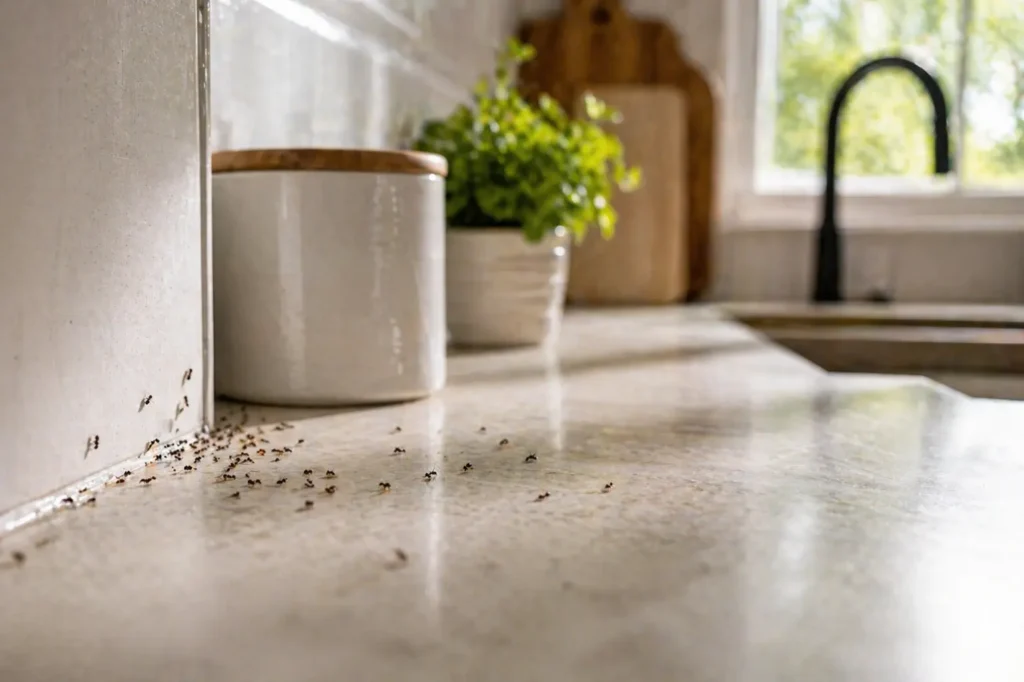
1. Ants
Colonies can remain outdoors while workers repeatedly enter for food or water. Trails may shift after weather changes or surface treatment.
2. Cockroaches and palmetto bugs
Outdoor species may reinvade through gaps, while indoor species can reproduce in protected harborage. Moisture and food control remain important.
3. Mosquitoes
Adults move between properties and new breeding water appears after rain. Seasonal reduction works best with repeated water and resting-zone management.
4. Spiders
Web removal helps, but spiders return when insect prey, exterior lighting, shelter, and access remain.
5. Fleas and ticks
Hosts, yard edges, pet areas, and staggered life stages can create repeat exposure. Property treatment and veterinary prevention need coordination.
What recurring service should accomplish
A responsible plan should monitor changes, target active zones, adjust for seasons, and reinforce prevention—not repeat the same visit without considering evidence.
Decide from the property record, not the calendar alone
Before choosing a recurring schedule, keep a simple record of the pest, location, date, weather, and any change in the home or yard. A predictable ant trail after rain, mosquitoes that build after water collects, and fleas linked to host activity call for different follow-up. The record also helps distinguish a seasonal return from a treatment that never reached the source.
Ask what changes between visits
A useful service plan should explain what the technician monitors, which exterior or interior zones are treated, what the homeowner should correct, and what would cause the plan to change. Report leaks, construction, new pets, wildlife activity, or a moved feeding area rather than waiting for the next routine visit. If there is no current evidence and the property is no longer favorable, ask whether monitoring or a different interval makes more sense.