
Mosquito behavior
What attracts mosquitoes the most?
Understanding what attracts mosquitoes can help you reduce the conditions that make a yard more inviting. Mosquitoes use carbon dioxide, body heat, movement, scent, moisture, shade, and nearby breeding habitat to find hosts and places to rest.
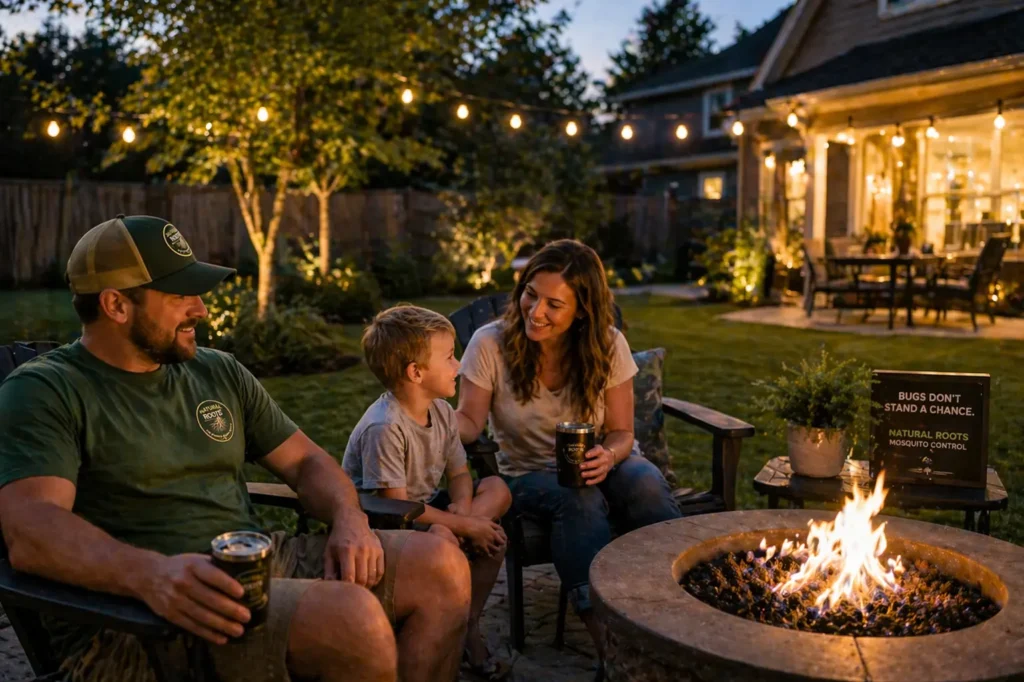
What attracts mosquitoes around your yard?
Exhaled carbon dioxide and body heat help mosquitoes locate hosts. Individual biology, movement, clothing, and skin-related odors can affect who notices more bites, but no person is completely “mosquito proof.”
Standing water supports the next generation
Different species use different water sources, including plant saucers, buckets, toys, gutters, tarps, bird baths, low spots, and natural containers. Water does not need to be a large pond to matter.
Shade gives adults a resting place
Dense vegetation, the undersides of leaves, damp yard edges, and protected areas around decks or structures can shelter adult mosquitoes during hot periods.
Reduce attraction where you can
- Empty or refresh standing water regularly.
- Clear accessible gutters and drainage obstructions.
- Trim dense vegetation near high-use spaces when practical.
- Use screens and fans around porches or patios.
- Follow public-health guidance for repellents and protective clothing.
Some familiar explanations are incomplete
Sweet food, a single plant, or a certain blood type does not explain the whole pattern around a yard. Host cues help mosquitoes find a person, but local water, shade, species, weather, and time of day influence how many are nearby. Removing one flowering plant while leaving a clogged gutter or water-filled toy is unlikely to address the main source.
Map bites to time and place
For several days, note where bites occur, the hour, recent rain, wind, and nearby shade or water. Compare the patio, entry, play area, pet route, and wooded edge. This simple map can reveal whether the priority is a breeding container, an adult resting zone, an unscreened opening, or mosquitoes arriving from beyond the property.