
Wood-destroying insects
Termite control in Columbia, SC.
Termite control in Columbia begins with checking for mud tubes, swarmers, damaged wood, moisture, and conducive conditions. South Carolina warmth, moisture, crawl spaces, and wood-to-soil contact can create serious termite pressure. Early inspection helps identify activity before damage becomes more extensive.
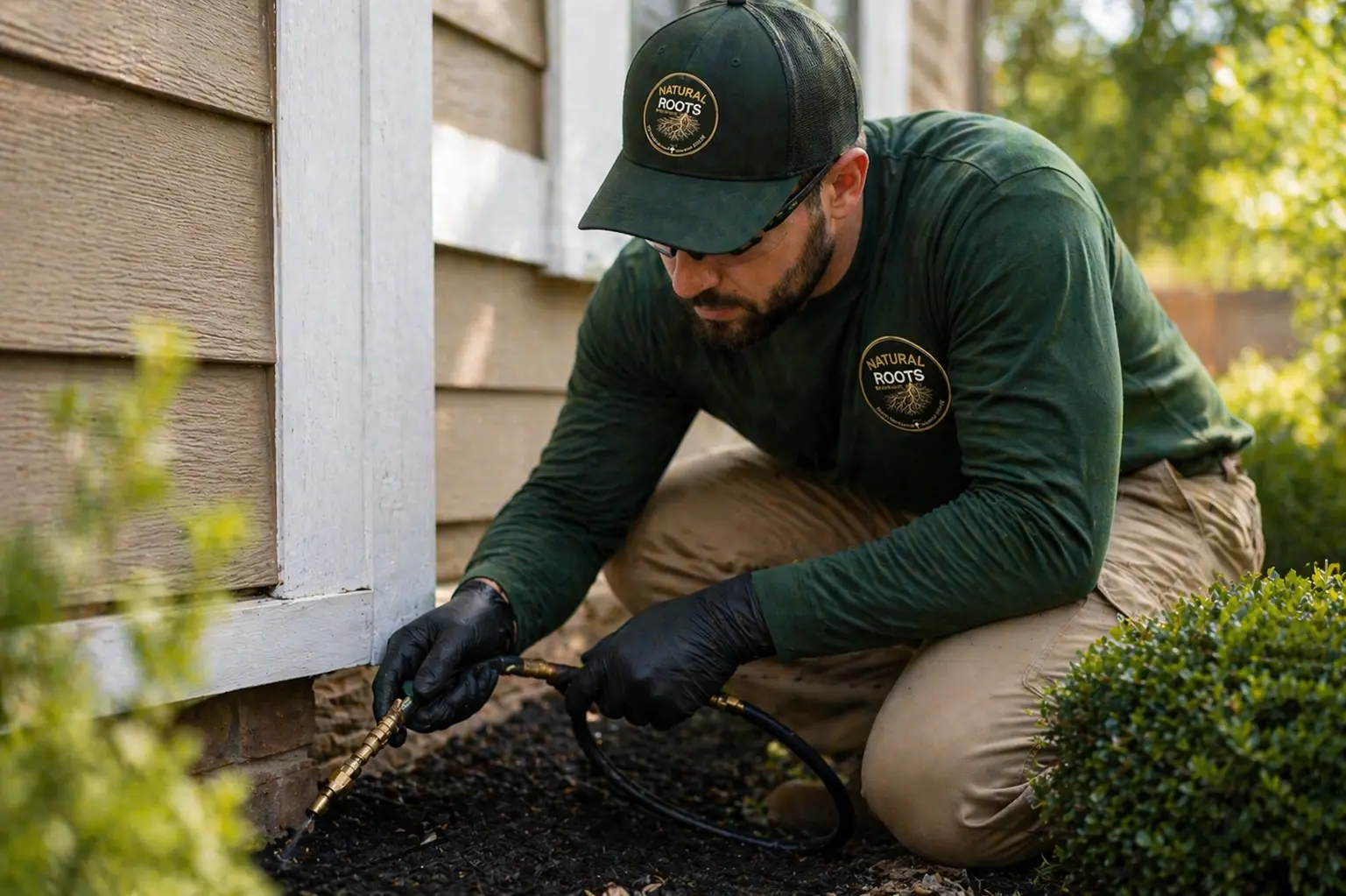
Possible warning signs
How termite control in Columbia protects homes.
- Mud tubes near foundations or crawl spaces
- Soft, hollow, blistered, or damaged wood
- Discarded wings near doors or windows
- Moisture or wood-to-ground contact
- Unexplained damage around trim, flooring, or framing
Inspection-led guidance
Understand activity and conducive conditions.
Natural Roots can review likely activity zones, foundation and crawl-space conditions, moisture concerns, and treatment options when evidence is found. A professional inspection is the right starting point; appearance alone cannot confirm the full extent of a termite problem.
Before the inspection
Preserve signs and make key areas accessible.
Photograph mud tubes, wings, damaged trim, or suspicious wood before cleaning or repair. Note where the evidence appeared and whether recent leaks, drainage changes, renovations, or landscaping altered moisture around the structure. Do not break every tube or spray the area; the pattern can help an inspector understand activity.
When practical, provide safe access to crawl-space entries, utility areas, garages, and the interior wall near the concern. Keep stored items clear enough to view relevant edges without moving anything unsafe.
Conditions that deserve attention
Moisture and wood contact can increase risk.
Leaking plumbing, poor drainage, damp crawl spaces, clogged water paths, wood debris, and direct wood-to-soil contact can make a property more favorable. Correcting those conditions is useful, but visible repair alone does not establish whether termites remain active elsewhere.
Natural Roots can explain inspection findings and available next steps for the property. Because termite evidence can resemble damage from moisture or other insects, avoid relying on a photo alone or covering the area before it has been evaluated.
Columbia + the Midlands
Local warmth and moisture make termite inspection important.
South Carolina crawl spaces, hidden foundation edges, drainage concerns, and wood-to-soil contact can create favorable conditions while activity remains out of sight. Local service starts by separating termite evidence from moisture damage and other wood concerns.
Related services
Other conditions that can affect home protection.

General Pest Control
Address recurring insects around kitchens, baths, foundations, and exterior access.

Mosquito Control
Review standing water, shade, vegetation, and the outdoor areas your family uses.

Wildlife Removal
Inspect rooflines, attics, vents, crawl spaces, and repeat animal entry.
Termite questions
Know when to act.
Are termites common in South Carolina?
Yes. The region’s warmth and moisture can support termite activity, particularly around crawl spaces, foundations, and wood-to-soil contact.
Can termites cause expensive damage?
They can damage structural wood over time. The earlier activity and contributing conditions are identified, the better.
Does a swarm mean my home has termites?
Swarmers or discarded wings deserve prompt inspection, but a professional should identify the insect and determine where activity is occurring.
Can a photograph confirm a termite problem?
A clear photograph can preserve useful evidence, but it cannot show the full activity area or reliably distinguish every termite sign from moisture or other insects. An on-site inspection is the appropriate next step.
How service works
Inspect. Respond. Protect.
Every recommendation starts with evidence from the home and ends with clear next steps.
 01
01Inspect
Look for activity, access, moisture, shelter, and the conditions supporting the problem.
 02
02Respond
Match the service plan to the pest, wildlife issue, property, and level of activity.
 03
03Protect
Explain follow-up and practical changes that can reduce repeat pressure.
Protect the structure