Trails and colonies
Ant control in Columbia, SC.
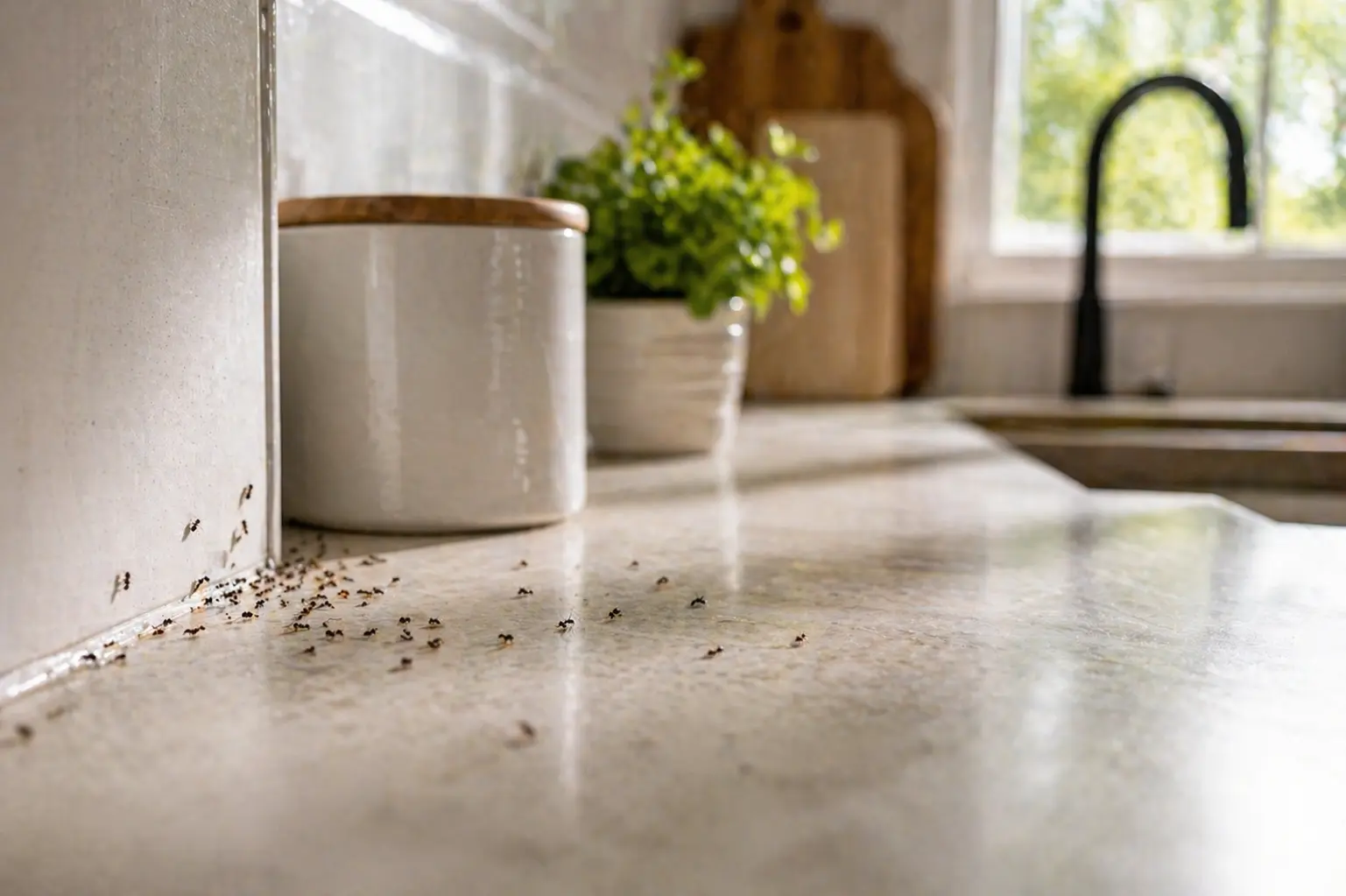
Ant control in Columbia starts by following food, moisture, landscaping, cracks, and scent trails. Treating only the ants on a counter can miss the colony and exterior route.
Follow the evidence
How ant control in Columbia follows the trail.
- Counters, floors, walls, sinks, or pet bowls
- Pantries, window frames, doors, and plumbing penetrations
- Foundation edges, landscaping, and tree contact
- Activity increasing after rain or hot weather
- Trails returning after household sprays
Species and source matter
Not every ant problem is treated the same.
Natural Roots can assess interior and exterior activity, likely colony or entry conditions, and moisture or food sources. Avoid scattering a trail with excessive repellent before inspection; it can make the route harder to follow.
Before the visit
Keep the trail visible if you can.
Note when activity is strongest and take a photo of the ants and their route. Wipe ordinary food spills, but avoid spraying or scrubbing away the entire trail immediately before an inspection. Mention recent rain, plumbing leaks, new mulch, tree contact, or another treatment that may have changed the pattern.
If ants are near food, medicine, a child’s room, or a pet-feeding area, identify that clearly so the technician can discuss preparation and placement around the way your household uses the space.
After treatment
Monitor the route, not only the count.
Some approaches work through foraging ants and may not make a trail disappear the same day. Follow the service instructions, keep competing food sources controlled, and report whether the trail shrinks, shifts, or begins in a new place. Sealing a confirmed access point, correcting a leak, and keeping vegetation or mulch from pressing against the structure can reduce the conditions that support another route.
For broader household activity, review general pest control.
Columbia + the Midlands
Warm weather and rain keep local colonies active.
Ants can travel from lawns, landscape beds, foundations, trees, and damp exterior areas into Midlands kitchens and bathrooms. Changes in rain, temperature, food, and moisture may shift trails even when the colony remains outside.
Related services
Other pest pressure around the home and yard.

General Pest Control
Build broader protection for ants, roaches, spiders, and recurring household insects.

Mosquito Control
Address standing water, shade, vegetation, and biting pressure around outdoor spaces.

Termite Control
Inspect foundations, crawl spaces, wood contact, and moisture-related risk.
Ant questions
Why the trail returns.
Why are ants in the kitchen?
Kitchens offer food, water, warmth, and many small access points. A trail may begin well outside the room where ants are visible.
Can Natural Roots treat inside and outside?
Recommendations can address both interior activity and the exterior conditions supporting it, depending on the species and property.
Why did my spray work only briefly?
It may have killed exposed workers without reaching the colony or correcting the route, moisture, or food source.
Are all ants treated the same way?
No. Species, colony location, trail pattern, and property conditions can change the appropriate response, which is why identification and inspection matter.
How service works
Inspect. Respond. Protect.
Every recommendation starts with evidence from the home and ends with clear next steps.
 01
01Inspect
Look for activity, access, moisture, shelter, and the conditions supporting the problem.
 02
02Respond
Match the service plan to the pest, wildlife issue, property, and level of activity.
03Protect
Explain follow-up and practical changes that can reduce repeat pressure.
Follow the trail to the source