
Webs and spider activity
Spider control in Columbia, SC.
Spiders follow shelter and insect prey. Reducing webs can help, but lasting control also considers lighting, clutter, exterior gaps, and the insects attracting them.
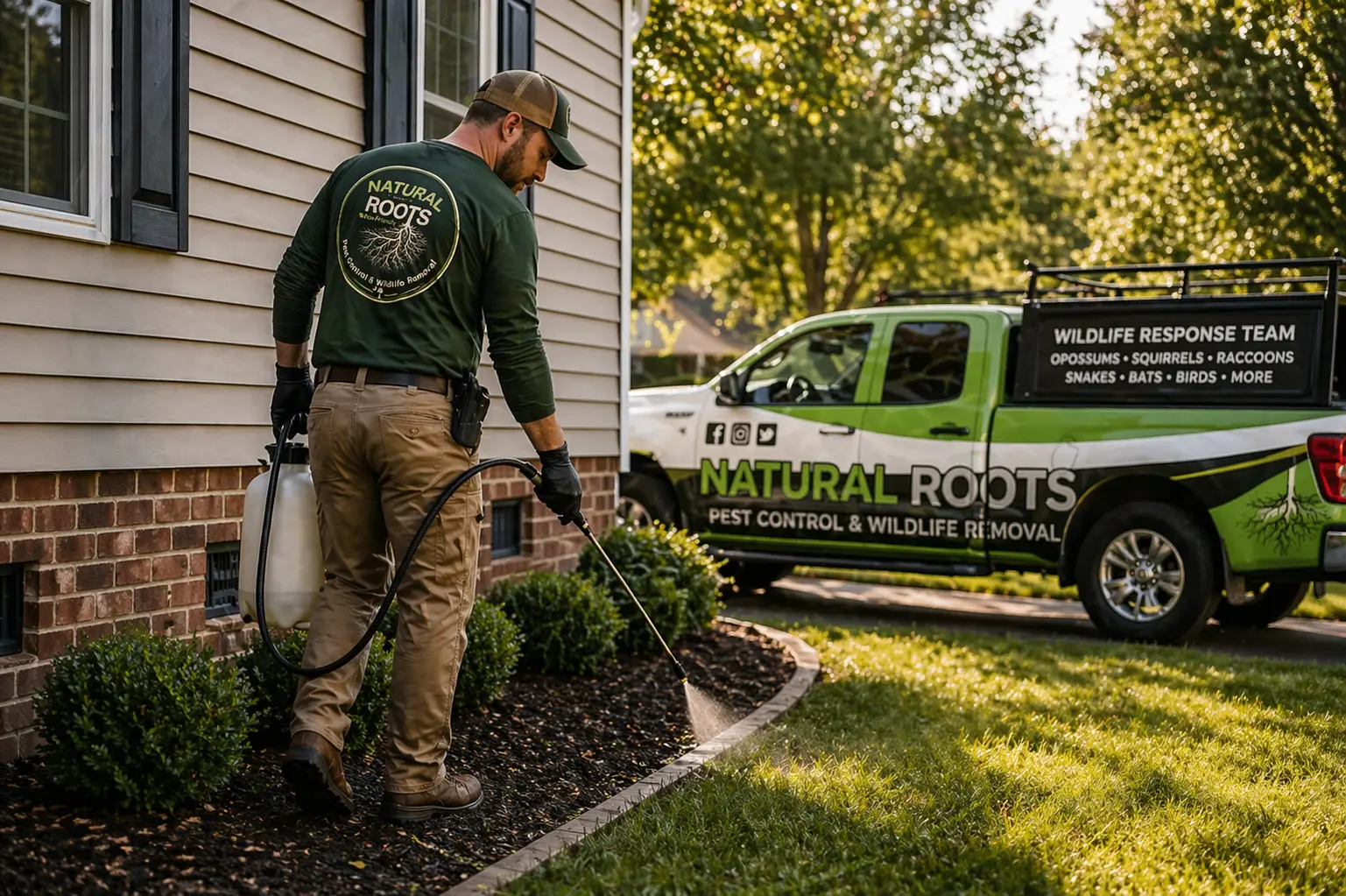
Where spiders gather
Look at shelter and prey.
- Webs around windows, eaves, lights, or porch ceilings
- Activity in garages, sheds, basements, or storage
- Clutter and undisturbed corners
- Gaps around doors, screens, pipes, or vents
- High insect activity near outdoor lighting
Integrated control
Reduce what makes the property attractive.
Natural Roots can address active areas and recommend practical web removal, prey reduction, lighting, storage, vegetation, and exclusion steps. Seek prompt medical guidance for a suspected harmful bite; pest control cannot diagnose a bite.
Why webs return
Spider pressure follows food and shelter.
Web removal can improve appearance and remove active hiding places, but spiders often rebuild when insects remain abundant. Exterior lights near doors, gaps around screens, shaded vegetation, mosquitoes, flies, and other prey may all keep a porch, garage, or eave attractive.
Note where webs rebuild, whether spiders stay outdoors or enter living areas, and whether stored items have been undisturbed. Avoid reaching into boxes, crawl spaces, or hidden corners with bare hands.
Practical prevention
Make high-use areas less favorable.
Repair screens and door sweeps, adjust lighting placement or bulb type where practical, organize storage, remove unnecessary cardboard, and keep vegetation from pressing against the structure. Vacuum accessible indoor webs carefully and dispose of contents according to the vacuum instructions.
Natural Roots can assess both spider activity and the insects supporting it. If an unknown spider could be medically important, do not handle it; seek medical advice for a concerning bite. The spider reduction guide covers more homeowner steps.
Columbia + the Midlands
Where local insects thrive, spiders can find steady prey.
Warm seasons, exterior lights, wooded yards, garages, eaves, sheds, and shaded vegetation can support insect and spider activity around Midlands homes. Lasting reduction considers webs, shelter, access, and the prey drawing spiders to the area.
Related services
Reduce the other insects supporting spider pressure.

General Pest Control
Address recurring household insects, exterior access, shelter, food, and moisture.

Mosquito Control
Review flying-insect pressure around shade, vegetation, standing water, and patios.
Cockroach Control
Inspect warm, damp, sheltered areas that can support another source of spider prey.
Spider questions
Control the conditions too.
Why do spiders collect around lights?
Lights attract flying insects, which provide prey. Adjusting light placement or color can sometimes reduce that food source.
Will removing webs solve the problem?
It helps with existing sites, but new spiders may return while prey, shelter, and access remain.
Can you identify every spider from a photo?
A clear photo may help, but in-person evidence is more reliable. Avoid handling an unknown spider.
Does spider control also consider other insects?
Yes. Spiders follow prey, so reducing the insects around lights, entry points, garages, eaves, and vegetation can be an important part of the plan.
How service works
Inspect. Respond. Protect.
Every recommendation starts with evidence from the home and ends with clear next steps.
 01
01Inspect
Look for activity, access, moisture, shelter, and the conditions supporting the problem.
 02
02Respond
Match the service plan to the pest, wildlife issue, property, and level of activity.
 03
03Protect
Explain follow-up and practical changes that can reduce repeat pressure.
Reduce webs and prey